





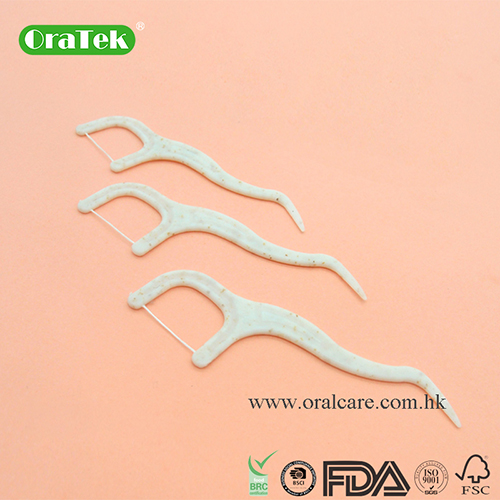
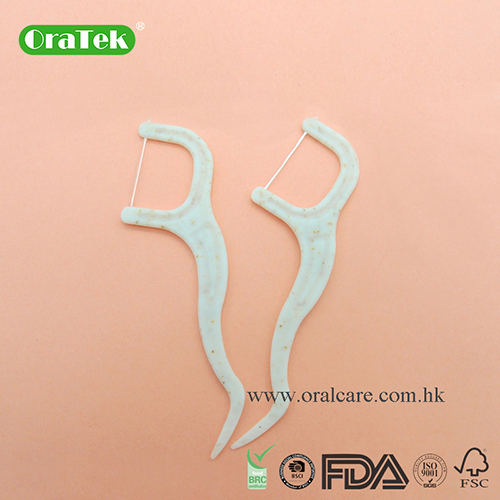
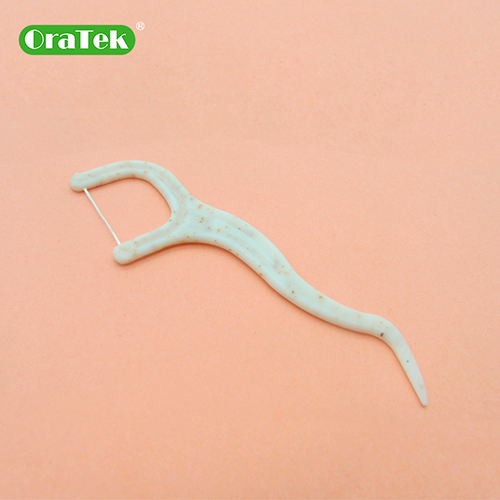

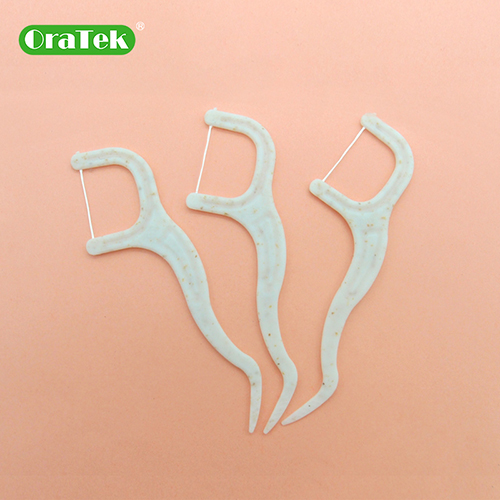

What Is A Wheat Straw Dental Floss Pick?
A wheat straw dental floss pick is a modern, eco‑conscious version of the classic plastic floss pick. Instead of using a petroleum‑based handle, it uses a handle made partially or completely from wheat straw material, combined with a thin, durable dental floss thread designed for tight gaps between teeth. This simple change in material has wide‑reaching implications for sustainability, manufacturing, branding, and end‑of‑life disposal.Basic Structure Of A Wheat Straw Floss Pick
Although the sustainability profile is very different, the basic structure of the wheat straw dental floss pick is familiar and intuitive for consumers: The handle is ergonomically shaped, with a curved flossing head that holds a short length of floss under tension. This allows users to glide the floss easily between teeth without wrapping long floss strands around their fingers. Many designs also incorporate a tapered or pointed end that can function as a gentle toothpick, helping remove food particles along the gum line or in wider gaps. For professional buyers, this familiar format minimizes consumer learning curves and makes it easy to replace conventional plastic flossers with a greener option without sacrificing ease of use.How Wheat Straw Differs From Conventional Plastic
Wheat straw refers to the dry stalks that remain after wheat grains are harvested. Traditionally, this agricultural by‑product has been treated as waste and often burned, contributing to air pollution and unnecessary carbon emissions. By converting wheat straw into a molded, polymer‑like material, manufacturers can reduce dependence on fossil fuels, divert agricultural waste from burning, and create an alternative that can be industrially compostable or significantly lower impact than virgin plastic. Wheat straw material is generally BPA‑free, does not contain heavy metals, and can be formulated to be food‑contact safe. It is often blended with biodegradable polymers or reduced‑plastic compounds depending on the product’s performance requirements. For floss picks, the result is a strong yet lightweight handle with a natural aesthetic that communicates environmental responsibility to consumers.Why Choose Wheat Straw Over Traditional Plastic?
For end users, distributors, and brand owners, there are multiple reasons to shift from conventional plastic floss picks to wheat straw alternatives. Some of these reasons are environmental, others are commercial, and many are strategic, aligning with corporate sustainability goals, ESG commitments, and evolving consumer expectations.Environmental Advantages
Wheat straw handles start with a renewable agricultural resource rather than virgin petrochemicals. Instead of creating new fossil‑based resin, manufacturers utilize a by‑product that would otherwise have limited economic value. By incorporating wheat straw into oral care products, brands help support circular economy principles in agriculture. Energy demand and carbon emissions related to production can be significantly lower than for comparable conventional plastics, especially when wheat straw content is high and production processes are optimized. The material can be engineered to be biodegradable or compostable in appropriate conditions, helping to reduce the long‑term persistence of oral care waste in landfills and the natural environment. From a marketing and sustainability reporting perspective, the use of wheat straw can contribute to reduced plastic use per unit, lower carbon footprint claims, and more credible eco‑labels.Health And Safety Considerations
Many consumers are increasingly concerned about substances such as BPA, phthalates, and certain additives found in some plastics. Wheat straw based materials are typically formulated to be BPA‑free, with food‑grade, globally acceptable additives where needed. In addition, because wheat straw is processed into a polymer‑like composite, it is usually 100% gluten‑free and non‑allergenic, despite originating from the wheat plant. That makes it suitable for consumers who are sensitive to gluten or who follow specific dietary restrictions. For international buyers, particularly those selling into markets with strict consumer health regulations, these properties can be a significant advantage.Performance And Durability In Daily Use
A key requirement for any floss pick is strength: the handle must not snap easily, and the floss thread must resist shredding or breaking, even in tight interdental gaps. Modern wheat straw floss picks are engineered for exactly this kind of performance. The handle structure is rigid enough to provide leverage, yet slightly flexible to avoid brittle fracture during use. Many brands pair wheat straw handles with reinforced nylon or similar high‑strength thread that glides smoothly yet effectively removes plaque. Users experience a familiar, comfortable flossing motion with the added benefit of a more sustainable handle material. For hospitality, travel, and retail customers, this balance between eco‑friendliness and proven functionality is critical to long‑term adoption.Understanding Wheat Straw Material In Detail
Because wheat straw dental floss picks rely on an innovative material system, it is helpful to understand what wheat straw plastic (or composite) really is, how it is made, and how it behaves in real‑world applications. This knowledge allows buyers to evaluate suppliers, request appropriate certifications, and communicate benefits clearly to their own customers.What Exactly Is Wheat Straw Material?
Wheat straw material is derived from the stalks of the wheat plant, which are rich in cellulose and lignin. These natural polymers can be processed and combined with binding agents or biodegradable polymers to create a moldable material with plastic‑like properties. The manufacturing process often involves cleaning and pulverizing the straw, extracting fibers, and blending them with a resin system. This resin system may be bio‑based, biodegradable, reduced‑plastic, or a mix of bio‑based and conventional plastics depending on the formulation. The final pellets can then be injection molded or otherwise shaped into products such as cups, toothbrush handles, and, increasingly, dental floss picks.Key Properties Of Wheat Straw Composite
Once processed, wheat straw material offers a number of properties particularly well suited to personal care applications. It has good stiffness and structural integrity relative to its weight, enabling thin but strong floss pick arms. It is typically odor‑neutral when properly processed and does not impart off‑flavors when used in oral products. It can withstand typical bathroom storage conditions, including exposure to humidity and moderate temperature variations, without warping or degrading prematurely. It can be colored using food‑grade or cosmetic‑grade pigments to match brand identity, while still maintaining its environmentally friendly positioning.Gluten‑Free And Non‑Allergenic
Even though wheat straw originates from the same plant used to produce flour, the straw used for bio‑composites does not contain gluten proteins. The parts of the plant that cause gluten sensitivity are in the grains, not in the stalk fibers. During processing, any residual organic residues are further removed or transformed, so the final material is considered gluten‑free and non‑allergenic. This makes wheat straw floss picks suitable for most consumers, including those with celiac disease or non‑celiac gluten sensitivity. Brands targeting health‑conscious or allergy‑sensitive customers can confidently highlight this benefit in product literature and packaging.Why Plastic Free Packaging Matters
Switching to a wheat straw handle is an important step, but it is only part of the sustainability equation. Truly eco‑conscious oral care brands and hotel amenities suppliers are increasingly demanding plastic free packaging to complement low‑impact product materials. This is particularly true for export markets in Europe, North America, Oceania, and premium segments in Asia, where regulatory and consumer expectations are tightening rapidly.Defining Plastic Free Packaging For Floss Picks
Plastic free packaging for wheat straw dental floss picks generally means eliminating conventional petroleum‑based plastic components from the outer and inner packaging. Instead of blister packs, shrink wraps, or plastic pouches, producers use alternatives such as FSC‑certified paper boxes, kraft sleeves, paper labels, and compostable or recyclable sealing methods. Even small details, such as windows on boxes, internal dividers, or protective wraps, can be re‑engineered using plant‑based films or omitted entirely. The aim is to ensure that the entire product, from the floss pick to the box, aligns with zero‑plastic or low‑plastic waste objectives.Regulations And Market Expectations
Across many markets, regulations are increasingly discouraging or banning single‑use plastics, particularly in packaging. Retailers, hotel groups, airlines, cruise lines, and e‑commerce platforms are responding by updating their procurement standards. For example, hotel amenities suppliers are often asked to reduce plastic in guest room products, including dental kits and floss picks. Supermarkets and online marketplaces may add “plastic free,” “recyclable,” or “compostable packaging” requirements to their sustainability scorecards. By offering wheat straw dental floss picks in fully plastic free packaging, manufacturers can help buyers meet these evolving standards smoothly, without needing multiple packaging redesigns over a short time frame.Consumer Perception And Branding
Packaging is often the first touchpoint with a product, and customers increasingly expect that an eco‑friendly item will also come in eco‑friendly packaging. A plastic free carton with clear sustainability messaging, certifications, and minimal ink conveys authenticity and care. It reinforces the story behind the wheat straw handle and makes it easier for consumers to recycle or compost the package at home. For brands, this offers a cohesive narrative and visual identity that can differentiate their oral care line on crowded shelves, in digital marketplaces, or in hotel room amenity displays.Handle Materials, Floss Thread, And Available Options
While “wheat straw dental floss pick” may sound like a single, uniform product type, there are various formulations and configurations available to meet different application, regulatory, and price requirements. Professional buyers can collaborate with experienced factories to customize handle composition, floss thread type, and surface treatments.Handle Composition Options
Depending on performance targets and regional regulations, wheat straw floss pick handles may be: Purely wheat straw based composites, where wheat straw is combined with biodegradable or bio‑based polymers to achieve a high renewable content. These options are well suited for brands strongly focused on compostability and minimal plastic use. Wheat straw mixed with reduced‑plastic polypropylene or other plastics, which can significantly reduce total plastic use while still delivering conventional plastic‑like durability. In these hybrids, wheat straw content can vary, allowing for different price‑performance levels. Tailored blends developed for specific certifications, such as certain compostability standards or specific national regulations. In each case, the manufacturer can provide documentation and test results to support eco‑claims and compliance.Floss Thread Types
The floss itself is a crucial component of the product. While the handle may be biodegradable or low‑plastic, the floss thread must also meet performance and safety criteria. Common options include high‑strength nylon or similar synthetic threads engineered not to shred easily, especially in tight interdental spaces. Some formulations have textured surfaces or micro‑grooves that increase plaque removal efficiency while remaining gentle on gums. Floss thread may be unflavored or infused with mint or herbal flavors to enhance the feeling of freshness after use. Some brands also request waxed threads to improve glide and comfort, particularly for users with very narrow gaps between teeth. Although the floss thread may not always be fully compostable in every formulation, its mass is relatively small compared with the handle and packaging, and ongoing material innovations continue to reduce its environmental impact.Flavor And Functional Additives
To align with consumer expectations and marketing positioning, wheat straw floss picks can incorporate various flavorings and functional additives. A popular choice is natural or nature‑identical mint flavor, providing a clean, refreshing sensation after flossing. This is widely used in both retail packs and hotel‑amenity versions. Some premium products also include vitamin or herbal infusions in the toothpick end coating or surface treatment, aiming to add perceived oral health benefits or gentle gum care. All additives should meet food‑contact or cosmetic‑grade purity standards and comply with local regulations in target markets. Customization of flavor intensity, sweetness level, and mouthfeel is possible during product development with an experienced OEM partner.Applications: From Retail Shelves To Hotel Amenities
Wheat straw dental floss picks with plastic free packaging are versatile products suited to a wide range of distribution channels, usage occasions, and brand strategies. For an international factory based in Hong Kong and China, this diversity of applications is one of the main reasons to invest heavily in this category.Retail And E‑Commerce Brands
Retailers and direct‑to‑consumer brands can integrate wheat straw floss picks into their oral care ranges as standalone products or as part of sustainable oral care sets. Eco‑focused brands often position wheat straw picks alongside bamboo toothbrushes, natural toothpaste tablets or powders, and reusable tongue cleaners. Mainstream brands may launch wheat straw lines under sub‑labels dedicated to sustainability, targeting climate‑conscious or zero‑waste shoppers. Packaging sizes can range from compact 20‑ or 30‑count packs for travel and trial to larger 50‑, 75‑, or 100‑count household packs optimized for cost‑per‑use and e‑commerce shipping. The clear environmental story and visually appealing, natural‑looking handles make these products suitable for both brick‑and‑mortar and online marketing.Hotel, Resort, And Hospitality Amenities
Hospitality has emerged as one of the most dynamic growth areas for wheat straw dental floss picks. Many international hotel groups are phasing out plastic amenities and seeking credible alternatives that align with their sustainability frameworks. Wheat straw floss picks, individually packed in plastic free paper sachets or placed in small recyclable cartons, fit perfectly into this transition. They can be used in guest room dental kits, VIP amenity sets, spa welcome packs, and conference or event giveaways. Custom branding options, including logo printing on the sachet or box, allow hotels to associate their name with modern environmental responsibility. Because hospitality amenities are often single‑use, replacing conventional plastics with wheat straw and plastic free packaging has an immediate visibility and impact.Travel, Airline, And Corporate Gift Sets
Travel retailers, airlines, and corporate clients often look for compact, lightweight, and useful items for amenity kits and gift sets. A wheat straw dental floss pick is ideal in this context: it is slim, hygienic, and universally relevant, since oral care matters for almost every traveler or employee. Airlines can incorporate wheat straw floss picks in eco‑themed amenity kits for premium cabins. Corporate clients can include them in wellness gift boxes, sustainability‑focused campaign materials, or internal employee programs. For these applications, individual or small multi‑packs with clear co‑branding are common, and factories in Hong Kong and China are well positioned to deliver large volumes with customized packaging designs.Manufacturing Wheat Straw Floss Picks In Hong Kong & China
Working with a professional oral care products factory in Hong Kong and China offers strategic advantages for international brands. The region combines advanced manufacturing capabilities, supply chain efficiency, and experience in both conventional and sustainable oral care items.From Raw Material To Finished Product
The production of wheat straw dental floss picks begins with sourcing qualified wheat straw material or wheat straw composite pellets from vetted suppliers. Factories verify material safety and performance using test reports and incoming quality inspections. The composite pellets are dried and prepared for injection molding, then fed into precision molds designed specifically for floss pick geometries. Injection parameters are carefully controlled to ensure consistent density, mechanical strength, and dimensional accuracy. After molding, the picks are cooled, separated, and transferred to flossing equipment, where the floss thread is attached, tensioned, and fixed in place securely. Finally, the completed picks move on to automated or semi‑automated packing lines, where they are counted and packed into plastic free cartons or sachets, printed, sealed, and prepared for export.Quality Management And International Standards
Established oral care factories operate under structured quality management systems, often aligned with ISO standards, to ensure product safety, consistency, and compliance with destination market regulations. Critical stages such as material selection, molding conditions, floss thread attachment, and packaging integrity are monitored and recorded. Routine tests may include handle breakage resistance, floss tensile strength, flavor stability, microbiological tests where required, and packaging durability for transport. For international customers, third‑party testing from accredited laboratories can be arranged to demonstrate compliance with specific national or regional requirements, such as EU or North American consumer product safety standards.OEM & ODM Services For Global Brands
Many international buyers prefer to work under OEM (Original Equipment Manufacturing) or ODM (Original Design Manufacturing) models. In an OEM arrangement, the client typically supplies brand artwork, packaging specifications, and sometimes detailed product performance requirements, while the factory manufactures accordingly. In an ODM arrangement, the factory may propose existing designs, formulations, and packaging solutions that the client can adapt and brand. Hong Kong and China factories experienced in oral care can provide both models, supporting everything from concept development and sampling to mass production and logistics coordination. This flexibility allows start‑ups, established retail chains, hotel groups, and distributors to launch wheat straw dental floss pick lines quickly and efficiently, even without deep technical knowledge of oral care manufacturing.Design, Branding, And Customization Possibilities
One of the advantages of working with wheat straw composites and modern injection molding is the high degree of design flexibility. Beyond the standard floss pick profile, brands can differentiate through shape, texture, color, and packaging design tailored to target audiences and price segments.Ergonomic Handle And Pick Design
Handle geometry can be customized to enhance user comfort and brand identity. Some clients prefer a slim, minimalist profile aimed at travel kits and compact retail packs. Others opt for slightly thicker handles with textured grips for improved control, especially for older users or those with dexterity challenges. The toothpick end can be shaped for different functions, from a classic tapered tip to a slightly flattened shape for gentle gum massage. Even small details such as finger rests, anti‑slip patterns, and logo embossing can enhance perceived quality and usability.Color, Texture, And Visual Impact
Wheat straw material naturally has a subtle, speckled appearance reminiscent of natural fibers, which many eco‑conscious consumers find attractive. Brands can retain this “raw” look in neutral beige or light brown tones, or add safe colorants to create pastel or brand‑specific shades. Soft greens, blues, and off‑whites are common choices for natural oral care lines. Surface texture can also be adjusted through mold design; matte finishes, light ribbing, or organic patterns can elevate the tactile and visual feel of the product. These design choices help floss picks stand out in social media imagery, e‑commerce product listings, and in‑store displays.Private Label And Co‑Branding
Private label programs allow retailers, hotels, and distributors to market wheat straw dental floss picks under their own names, with unique packaging, storylines, and target pricing. Co‑branding is also possible, where a manufacturer’s sustainability expertise is referenced subtly while the client’s brand remains primary. For example, packaging may highlight “produced in partnership with an experienced oral care manufacturer in Hong Kong and China,” which can add credibility in certain markets. Factories can support artwork layout, language localization, regulatory text, barcodes, and sustainability messaging to ensure packaging is both compliant and persuasive.Advantages For International Buyers And Distributors
From a business perspective, adopting wheat straw dental floss picks with plastic free packaging delivers advantages that go beyond pure environmental benefits. It can support pricing strategies, brand differentiation, risk management, and long‑term market positioning.Alignment With ESG And Sustainability Goals
Many international companies have defined Environmental, Social, and Governance (ESG) targets that include reducing plastic usage, lowering carbon emissions, and increasing the share of sustainable products in their portfolios. Wheat straw floss picks help meet these goals in a concrete, measurable way. Corporate sustainability reports can highlight the transition from conventional plastic floss picks to wheat straw variants, quantify plastic reduction per unit, and describe improvements in packaging recyclability or compostability. This supports transparent communication with investors, regulators, and customers.Meeting Consumer Demand For Eco‑Friendly Products
Consumer research consistently shows growing interest in environmentally responsible personal care items. Shoppers are willing to switch brands, and in some cases pay a modest premium, for products that genuinely reduce environmental impact without compromising quality. By offering wheat straw floss picks, retailers and online sellers can tap into this demand, attract new eco‑conscious customers, and improve customer loyalty. For hotels and airlines, eco‑amenities enhance the guest experience, support green tourism certifications, and differentiate the brand among environmentally aware travelers.Competitive Differentiation And Storytelling
In a crowded oral care market, differentiation is vital. Wheat straw dental floss picks provide a rich story: agricultural waste transformed into a practical, everyday hygiene product; plastic free packaging aligning with zero‑waste values; and a direct contribution to reducing fossil‑fuel dependence. Marketing teams can use this narrative in content marketing, social media campaigns, packaging copy, and in‑store signage. Combined with attractive design and high performance, this storytelling unlocks a clear competitive advantage.Quality, Safety, And Compliance Considerations
For professional buyers, especially those operating across multiple countries, ensuring quality and regulatory compliance is essential. Wheat straw floss picks must meet the same performance and safety benchmarks as conventional products, with additional documentation for environmental claims.Performance Testing
Key performance metrics typically include handle breakage resistance under flex and torsion, floss tensile strength and resistance to shredding, performance in tight interdental spaces, and user comfort, including gum friendliness and ease of reach. Reputable factories will conduct internal tests and can arrange third‑party validation as needed. Pilot runs and market trials can help ensure that the chosen design and formulation meet local consumer expectations before large scale rollout.Safety Standards And Material Compliance
All materials used in wheat straw floss picks must be safe for oral use. This involves verifying that no harmful substances migrate from handle or floss into the mouth under normal conditions. Producers should be able to provide certificates relating to BPA‑free status, heavy metal content, and specific restricted substance lists depending on the region. In addition, flavoring agents and colorants should comply with relevant food‑contact or cosmetic regulations. When exporting to multiple markets, manufacturers can help navigate differing requirements and provide harmonized documentation packs to simplify regulatory filing for clients.Honest Environmental Claims
As sustainability becomes a stronger selling point, regulators are paying closer attention to green claims. Brands must ensure that terms such as “biodegradable,” “compostable,” “plastic free,” or “eco‑friendly” are accurate and supported by evidence. For example, compostability claims may need to specify whether they apply to industrial facilities or home composting environments. Plastic free packaging claims should be carefully defined, with any minor exceptions clearly justified. An experienced manufacturing partner can support clarified, honest messaging that satisfies both regulators and informed consumers, helping clients avoid the reputational risk associated with greenwashing.Logistics, Packaging Formats, And Supply Chain Efficiency
Moving from prototype to successful international distribution requires careful attention to packaging formats, logistics, and supply chain planning. Factories in Hong Kong and China have long experience optimizing these aspects for oral care products, and wheat straw floss picks fit naturally into these systems.Consumer Pack Sizes And Formats
Common configurations for wheat straw dental floss picks include compact travel packs designed to slip easily into handbags, backpacks, or amenity kits, offering enough picks for short trips or trial usage, and medium to large home packs optimized for families or frequent users, balancing shelf presence, price point, and eco‑credentials. Secondary packaging may group multiple consumer units into larger cartons for wholesale, supermarket, pharmacy, or online fulfillment. All packaging layers can be designed to minimize waste and be easily recyclable, supporting a coherent sustainability profile across the supply chain.Transport And Storage Considerations
Wheat straw floss picks are stable under standard transport and storage conditions. Properly designed cartons protect them from excessive moisture, dust, and mechanical damage. Because plastic free packaging may be more sensitive to moisture than plastic films, packaging design takes this into account, with appropriate board thickness, sealing method, and palletization standards. For international shipments, manufacturers can arrange container optimization, labeling in multiple languages, and routing options to balance cost, lead time, and carbon footprint according to client preference.Lead Times, Minimum Order Quantities, And Flexibility
Lead times for customized wheat straw dental floss picks typically depend on mold availability, packaging development, and printing schedules. Once tooling and designs are in place, repeat orders can be produced and shipped on regular cycles. Minimum order quantities vary by design and client requirements but can often be structured to support both large retail chains and smaller niche brands. Factories in Hong Kong and China can also coordinate drop‑shipping arrangements, mixed‑container shipments with other oral care SKUs, and phased deliveries to help clients manage inventory and cash flow efficiently.Best Practices For Launching A Wheat Straw Floss Pick Line
For companies considering their first wheat straw dental floss pick product, a structured approach increases the likelihood of a successful launch. The following best practices are based on experience working with international oral care brands and hospitality clients.Define Your Sustainability Positioning
Decide how prominently sustainability will feature in the product’s identity. Some brands lead with eco‑credentials and target zero‑waste or environmentally focused consumers. Others position wheat straw floss picks as their standard product, emphasizing comfort and quality first, with sustainability as an added advantage. This positioning will influence choices around handle composition, packaging materials, visual design, and messaging tone.Balance Performance, Cost, And Eco‑Impact
Different markets and channels have different price sensitivities. Work with your manufacturer to identify the optimal combination of wheat straw content, floss thread type, and packaging complexity. For premium eco‑lines, higher wheat straw content and fully compostable packaging may justify a higher price point. For mass retail, a carefully optimized blend that significantly reduces plastic while maintaining affordability may be preferable. Open communication about target retail price, margin requirements, and volume expectations will help tailor the right specification.Test With Your Target Users
Before finalizing the design, conduct user testing within your target demographic. Collect feedback on handle comfort, floss performance, flavor profile, and packaging usability. Real‑world feedback can reveal subtle improvements, such as slightly adjusting handle thickness or changing flavor intensity, that can dramatically improve satisfaction. Share this feedback with your manufacturing partner early so adjustments can be built into production molds and formulations.Typical Specification Examples
To illustrate the range of possibilities, here is a sample table of typical wheat straw dental floss pick specifications frequently requested by international clients. These are example values only and can be adjusted to meet your specific needs.| Parameter | Example Option A | Example Option B | Example Option C |
|---|---|---|---|
| Handle Material | High wheat straw composite (bio‑based) | Wheat straw + reduced‑plastic PP blend | Custom wheat straw blend for premium line |
| Floss Thread | Extra‑thin, anti‑shred nylon | Standard thin nylon thread | Textured, waxed thread for tight gaps |
| Flavor | Natural mint | Unflavored | Strong mint or customized flavor |
| Packaging | FSC paper box, plastic free | Recyclable kraft box | Printed carton with eco‑inks |
| Unit Count Per Box | 25 picks | 50 picks | 100 picks |
| Target Channel | Travel & hospitality | Mass retail & pharmacies | Premium eco‑stores & online |
Future Trends In Sustainable Oral Care
The rise of wheat straw dental floss picks is part of a broader transformation in oral care, where materials, packaging, and product formats are being reimagined for a resource‑constrained, climate‑aware world.Integration With Other Sustainable Oral Care Products
Brands are increasingly bundling wheat straw floss picks with other eco‑friendly items, such as bamboo or wheat straw toothbrushes, solid toothpaste tablets in glass or aluminum containers, plant‑based mouthwash concentrates, and reusable dental accessories. These curated sets appeal to consumers wanting to overhaul their entire oral care routine in a single purchase. For hospitality and corporate clients, coordinated eco‑amenity lines create a cohesive visual and ethical impression that reinforces sustainability commitments.Advances In Bio‑Based Materials
Material science continues to move rapidly. Beyond wheat straw, other agricultural by‑products and plant fibers such as rice husk, bagasse, and bamboo fiber are being explored. Multimaterial blends that optimize mechanical strength, compostability, and production efficiency are likely to appear. For floss picks, future iterations may further decrease synthetic components in floss thread, increase home‑compostable properties, and incorporate novel surface treatments to promote oral health.Stronger Regulatory And Certification Frameworks
As more sustainable products enter the market, standards and certifications around biodegradability, compostability, and recycled content are becoming more detailed. International manufacturers and brands will increasingly rely on clear labels and third‑party certifications to differentiate genuine innovation from superficial green claims. An experienced manufacturer in Hong Kong and China that invests in testing, certification, and transparent supply chain management will be a valuable long‑term partner for global buyers.FAQ – Wheat Straw Dental Floss Pick Plastic Free Package
Frequently Asked Questions
Are wheat straw dental floss picks really better for the environment than traditional plastic picks?
Yes, wheat straw dental floss picks significantly reduce dependence on virgin fossil‑fuel plastics by using agricultural by‑products as the main handle material and pairing them with plastic free packaging options. Although the floss thread may still contain synthetic components for strength, overall plastic use and long‑term persistence in the environment are greatly reduced compared with conventional all‑plastic flossers.
Is wheat straw material safe for people with gluten intolerance or allergies?
Wheat straw material used in dental floss picks is considered gluten‑free and non‑allergenic because it is made from the stalk of the plant, not the grain where gluten proteins are found. During processing, the straw is further cleaned and transformed, so no digestible gluten remains in the final composite material.
Can wheat straw floss picks be composted at home?
Whether a specific wheat straw floss pick can be composted at home depends on its exact formulation and the local composting conditions. Some high wheat straw content handles may break down in backyard compost systems over several months, especially under warm, active compost conditions, while others are better suited to industrial composting. Always refer to the manufacturer’s guidance on compostability and follow local waste regulations.
What does “plastic free packaging” mean for these floss picks?
Plastic free packaging means that the outer boxes, internal sleeves, and primary packs are made without conventional petroleum‑based plastic films or components. Instead, materials such as FSC‑certified paper, kraft board, and other recyclable or compostable substrates are used. This allows the packaging to be widely recycled or composted, reducing plastic waste associated with oral care products.
Do wheat straw dental floss picks work as well as traditional plastic flossers?
Properly designed wheat straw dental floss picks are engineered to match or exceed the performance of traditional plastic flossers. The handles are strong enough to withstand normal use, and the floss thread is chosen for high tensile strength and low shredding in tight gaps. In user tests, most people find the performance comparable, with the added benefit of a more sustainable material story.
Can hotels and airlines customize wheat straw floss picks with their own branding?
Yes, hotels, airlines, and other hospitality clients can fully customize wheat straw dental floss picks and their packaging. Options include customized paper sachets or boxes printed with logos and brand colors, choice of flavor, and selection of pack size suitable for amenity kits. An experienced oral care factory in Hong Kong and China can support artwork preparation, multi‑language printing, and coordinated logistics for international deployments.
What minimum order quantities are typical for private label wheat straw floss picks?
Minimum order quantities vary according to design complexity, packaging type, and printing requirements, but experienced factories usually offer flexible MOQs to accommodate both large retail chains and smaller niche brands. Discuss your expected annual volume, channels, and target markets with the manufacturer to agree on an MOQ and production schedule that match your business plan.
How can brands ensure that their environmental claims about wheat straw floss picks are accurate?
Brands should work closely with their manufacturing partners to obtain clear documentation on material composition, biodegradability or compostability tests, and any relevant certifications. Environmental claims should be specific and transparent, indicating where and under what conditions materials break down, and what is meant by terms such as “plastic free package” or “eco‑friendly.” This approach builds consumer trust and meets regulatory expectations.